Tuesday, March 30, 2010

Surviving in extreme cold

I watched a TED video today of a talk by Ken Kamler. He was a medic on an expedition to Everest where the climbers were caught out by extreme conditions nearing the summit. Several were killed. Last week on our BOHS Module courseM201 "Thermal Environment and Non-ionising Radiation" we discussed the effects of exposure to cold conditions. This video provides some dramatic illustrations.

One of the climbers caught out on the summit survived unexpectedly. An example of where willpower can lead to someone triumphing against extreme adversity. In his talk, Ken Kamler provides a physiological explanation for this.


Monday, March 15, 2010

Drive


I've just finished reading the recently published book, "Drive" by Daniel Pink. I bought it having seen his talk on motivation, delivered at the TEDGlobal conference in Oxford last year online.In it he argues that the old approach to rewarding people using "carrots and sticks" is outdated and doesn't work for jobs that are about innovation and initiative. He advocates a new "intrinsic" approach to motivation to replace the outdated "extrinsic" approach for this type of job. The new model of motivation has threHe elements:

  • autonomy - allowing people to direct their own work and organise their workload
  • mastery - feeding the urge to do work that is enjoyable and to get better at what you do
  • purpose - doing something with a larger objective rather than self-interest

Here's the talk he gave at TEDGlobal

I think that he makes a strong case and can see how it applies to my own work. I can see how it particularly applies to my work as an Associate Lecturer for the Open University. I've given up the role this year after working for them for 6 years. The work doesn't pay very well, much less than my "day job", so I clearly wasn't motivated by their "carrot". The pay was welcome, but was not so great. I did it because I enjoyed the work, think that I did a good job, and also was committed to the OU's purpose and ethos. The first two reasons fit into what Pink calls "Mastery" and the third is what he refers to as "Purpose". Within limits (you have deadlines to meet for marking assignments and set dates for tutorials) I could largely choose when I wanted to do the work, fitting it around my other commitments - so I had a large degree of "Autonomy".

I quit this year though. The OU is under severe financial pressures and this has had an impact on ALs. The size of tutor groups have been increased (in some cases this has been achieved by making some ALs redundant) meaning that there are more scripts to mark leading to a heavier workload. So called e-TMAs (assignments delivered electronically) have been made virtually compulsory, but no thought has been given to whether the assignments need to be modified to take account of this. I've found that marking on-screen rather than working with paper scripts is a lot more time-consuming and tiring to mark. This has further increased the workload. This has affected my autonomy and my enjoyment. The OU management style has also changed becoming more aggressive and making more demands on ALs. My feeling of purpose has also been adversely affected.

As my intrinsic motivation has been eroded the old-fashioned extrinsic motivational factors become more important and now the amount they pay comes into the equation and it quite simply isn't enough.

Friday, March 12, 2010

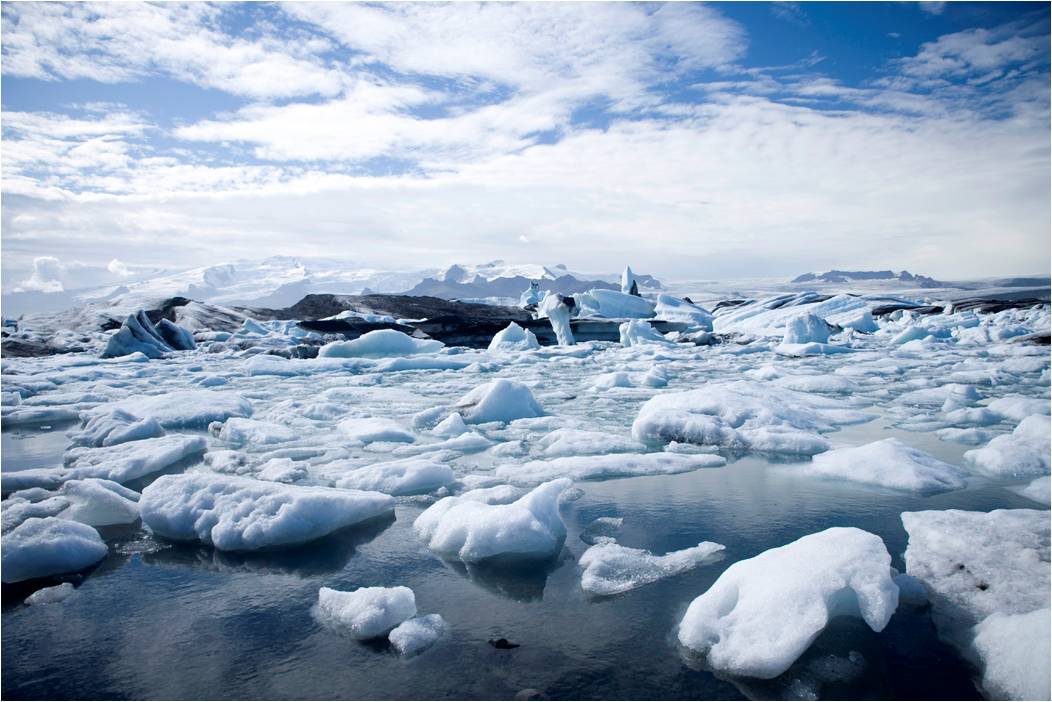
Coping with extreme cold

We’re running the BOHS module M201 “Thermal environment and non-ionising radiation (including lighting)” in a couple of weeks.

One of the topics we’ll be covering is cold stress and control of risks to health from work in cold environments.

An interesting blog I’ve been following is reporting on the Catlin Arctic Survey 2010. This is a British led expedition to the Artic who are investigating how greenhouse gases could affect the marine life of the Arctic Ocean. The team will be experiencing temperatures down to -30oC (by way of comparison, a domestic freezer is only–18ยบ) and wind speeds of up to 40kph. There is a real risk of condition such as frostbite and hypothermia.

The expedition doctor, Martin Rhodes, or “Doc Martin”, will be posting information on the medical aspects of the trip. A short video interview with him about the hazards to the human body when operating in a polar environment is available on their website here.

Wednesday, February 24, 2010

n-hexane

There was an interesting article in the Guardian a few days ago about the use of n-hexane in a factory in China. The company in question, which produces touch screens fro companies including Nokia, was using the solvent to clean the screens.

N-hexane is one of the organic compounds we study on BOHS Module course M101 ”Effects of hazardous substances”. As an alkane, we wouldn’t expect it to be particularly toxic. Alkanes generally are mild irritants and narcotics (substances that cause depression of the nervous system leading to effects similar to drunkenness). N-hexane is different in that it has been found to have another more serious chronic (i.e. long term) effect. Exposure to the compound can lead to peripheral neuritis – damage to the peripheral nervous system – causing symptoms such as loss of sensation in the fingers. There’s a good summary on the effects of n-hexane here.

The effects on the peripheral nervous systems are not due to the substance itself, but one of it’s metabolites - hexane-2,5-dione. It’s an example where the bitransformation of a substance in the body produces a more toxic compound.
The harmful effects are well known, and in the UK, Europe and the USA companies with a commitment to the health and safety of their workers would avoid using n-hexane wherever possible. It seems that the Chinese company actually used n-hexane as a substitute for the less toxic ethanol. According to the Guardian report about 49 workers were affected. The problem could have been avoided if a serious attitude was taken to health and safety and the principles of occupational hygiene were applied.

Friday, February 5, 2010

Selecting chemical protective gloves

Where gloves need to be worn for chemical protections its important that they are suitable for the chemical and application concerned and will provide protection for an appropriate time period. Too often inappropriate gloves are worn and even if suitable ones are used, they tend to be used long after they are capable of providing protection.

If it is necessary to use gloves then the first consideration is “what is the chemical we’re protecting against“. Once we know this data should be obtained from glove manufacturers on the breakthrough time, and the permeation rate. The breakthrough time is the time it takes for the chemical to work its way through the glove, which is normally well before any physical degradation has occurred. This will allow the most suitable glove to be selected, as breakthrough times for different gloves for a particular chemical will vary considerably. It will also usually allow the useful life of the glove to be defined – and the replacement frequency.

Degradation data should also be obtained – this is about the physical deterioration of the glove – as this can sometimes occur before breakthrough. Usability considerations are important too. It’s no good specifying gloves that aren’t usable because they’re not compatible with the work or the user.

Each manufacturer should provide data for their own products .

A pdf version of Ansell’s latest chemical resistance guide is available from here. They also have their information on line.

One of the other main suppliers, Marigold, also have an online guide.

Other manufacturer’s should have similar information available. If not, you can’t use their gloves for chemical protection.

Tuesday, February 2, 2010

New asbestos guidance


The HSE has jst launched it's new asbestos survey guide.

It can be ordered, or, even better, download for free from http://tiny.cc/6XNcH

"This heavily illustrated publication replaces and expands on MDHS100, surveying, sampling and assessment of asbestos-containing materials. It is aimed at people carrying out asbestos surveys and people with specific responsibilities for managing asbestos in non-domestic premises under the Control of Asbestos Regulations 2006. The book covers competence and quality assurance and surveys, including: survey planning, carrying out surveys, the survey report and the dutyholder's use of the survey information. It includes extensive appendices and references and it complements and supports other guidance on managing asbestos."

Sunday, January 31, 2010

Girls Aloud on occupational health?


I wouldn't admit to being a fan of Girls Aloud - I'm not sure what it would do to my reputation of I did! However, it was good to see the article in the Observer today about the campaign by Nicola Roberts, the red headed, pales skinned member of the group, against the use of sunbeds by under 18s. She features in a documentary - "Nicola Roberts – The Truth About Tanning", on BBC3 on Thursday 4th February.

Excessive exposure to UV radiation can lead to a number of skin problems including malignant melanoma. Young people are particularly vulnerable. According to the International Agency for Research on Cancer, the risk of melanoma was increased by 75% in people who started using sunbeds regularly before the age of 30. Yet peer pressure forces many pales skinned young people to use sun beds to try to give themselves a fashionable tan.

We cover the risks of non-ionising radiation on BOHS module M201 "Thermal Environment and Non-ionising radiation" which we are running w/c 22 March. I can't promise that Girls Aloud will be performing though!

Photo credit: Flickr http://www.flickr.com/photos/22948324@N08/2520077527/