Tuesday, May 11, 2010

Visual Notetaking

I stumbled across this presentation on Slideshare the other day

I think it’s a really example of the modern approach to presentation design as advocated by Garr Reynolds and Nancy Duarte. It’s well designed and very visual. No not boring lists of bullet points here. The content is good and interesting too.

To understand the message fully you’d need to listen to the presenter – and that’s what presentations are about – the slides should support the presentation. With Slideshare that’s not possible (unless the originator records a soundtrack to go with it) so the full message doesn’t come across. However, the creator, Eva-Lotta Lamm, has made the notes that go along with the presentation available on her blog “Do Not Forget”

I like the idea of using sketchnotes and have tried to use them when I’ve attended conferences and meetings over the last 12 months – but I’ve not got the hang of them yet. I’m not a natural sketcher and I still find myself writing out linear lists. But I’m going to keep trying!

Thermal Comfort

The thermal environment is one of the traditional topic areas studied by occupational hygienists. There are two issues:

  • thermal stress and strain
  • thermal comfort

Excessive thermal stress means that the body has to work hard to avoid he core temperature moving outside narrow limits (37 + 2 C). If that happens we’re in a serious situation that leads to serious health effects and may be fatal. Our efforts to prevent this happening can also lead to adverse effects. This is most likely to occur in extreme environments or, sometimes, in more moderate environments where particularly heavy work is being performed or clothing is worn which prevent metabolic heat escaping.

Thermal comfort is most likely to be an issue in workplaces such as offices, but complaints or concerns can sometimes occur in manufacturing environments and other types of workplace. In this case the body is not experiencing a level of stress that it can’t cope with. There isn’t a physiological problem and ill health will not occur due to excessive thermal strain. But that encompasses a wide range of conditions. Will all of them be “comfortable”? Experience clearly shows that the answer to that is “no” !

Most occupational hygienists don’t work in industries work in high or low temperatures and so usually don’t have to deal with problems due to workers experiencing excessive heat or cold stress. However most of us, at some time or other, will be faced with a situation where workers are complaining that an environment is uncomfortable.

The BOHS is holding a Regional Meeting at Ellesmere Port tomorrow on the thermal environment. I’ll be giving a presentation on how to evaluate thermal comfort. These are the slides I’ll be using.


Saturday, April 10, 2010

Jocelyn Bell Burnell - "Beautiful Minds"


On Wednesday this week I watched the first of a series of 3 programmes profiling British Scientists. It told the story of Jocelyn Bell Burnell, who, as a postgraduate student, discovered pulsars – highly magnetized, rotating neutron stars that emit pulses of radiation at regular intervals.

Jocelyn Bell comes across as a genuine, self efacing, modest person. She speaks quietly with a distinct brogue revealing her Northen Irish origin (interestingly, her sister, who was interviewed during the programme, didn’t have a trace of a Ulster accent!). The programme included segments of an interview with her, where she expressed views on the practice of science but mainly concentrated on the story of her discovery of pulsars. As a PhD student in Cambridge, working under Antony Hewish, she was given the task of building a radio telescope (not the dish type but a field full of wires) and analysing the data obtained. Being in the 1950’s this data was in the form of chart recorder data – yards and yards of paper.During this analysis she noticed a series of small “blips”. Initially dismissed as “noise” by her superiors she carried on obtaining better data by slowing down the pen recorder! This allowed her to analyse these “blips” in more detail and it was then quite clear that she had found a series of regular pulses, This led to quite a furore as initially it was thought these could be signals from ET. However, she went on to analyse other parts of the sky where she found similar signals, ruling out the ET theory.

Despite this marvellous work, it was her supervisor, Antony Hewish, who was awarded the Nobel prize. JBB didn’t get a mention. Hewish was interviewed during the programme and justified this by almost dismissing JBB’s role and arguing that it is a team effort and that the team leader is the person who deserves any credit. I think this was absolutely disgraceful and is indicative of the attitude of the scientific establishment. The “top men” taking all the credit and glory and also the embedded misogyny. Despite this, when discussing it during the programme (and I’ve seen other interviews with her where she takes the same attitude), she does not come across as bitter. I don’t know whether she feels any anger inside – if so, she does a good job of hiding it. I suspect this is partly explained by her religion – she is a Quaker and a gentle, stoic attitude and lack of bitterness seems to go allong with that.

Although I enjoyed the programme the content was inevitably limited it mainly concentrated on the pulsar story, only touching on other aspects of her life and career. I would have liked to have known more about how she squares her deep religious conviction with being a scientist and to have learnt more about her career after the 1950’s. In other programmes I’ve seen about her life she has mentioned how difficult it was to work in science as another and how she was able to keep in touch by working as a tutor for the Open University.

More information on JBB can be found on the Internet including some interviews with her that delve into some more detail, here.

Picture credit: NASA via Wikipdedia http://heasarc.gsfc.nasa.gov/docs/objects/heapow/archive/compact_objects/vela_pulsar_jet.html

Thursday, April 8, 2010

UK Nanotechnology Strategy

The UK Nanotechnologies Strategy was published on 18th March 2010. It outlines the strategy of the current government, so things may change after May 6th - we'll have to wait and see!


Nano Strategy Fully Accesible Version - Final

The potential health risks from nanoparticles are one of the "emerging issues" that occupational hygienists and health and safety professionals in general need to keep abreast of. Nanotechnology is a fast developing field and the toxicological implications are not fully understood. Governments see nanotechnology as an important emerging technology that can lead to economic benefits and is encouraging its development. It's important that sufficient emphasis is given to research into the health implications.

One of the strategic aims set out in the strategy document is a commitment to

"Better understanding of the risks associated with the use of, and exposure to, nanomaterials, and enough people with the right skills to assess them. "
In respect to this aim the document sets out the following actions
  • Approaches to Government EHS research on nanotechnologies will be explored by the Chief Scientific Adviser network, with the aim of improving co-ordination. A meeting will be chaired by the Government Chief Scientific Adviser, John Beddington.
  • There will be an ongoing portfolio of Government and publically funded research into a wide range of crucial EHS nanotechnologies issues including the behaviour of key nanomaterials in the gut when eaten and when inhaled into the lungs.
  • Contributions will be made to international work programmes on nanotechnologies including the Organisation for Economic Co-operation and Development’s (OECD) Nanotechnology Working Parties and the EU’s Framework Programme. The UK will work to influence the future scope of these projects.
All commendable, if rather vague.

One of the problems is that its only possible to see an effect once exposure has occurred so there is a dilemma - how can we detect effects in humans without exposing them to possible dangers? Animal experiments present difficulties both in terms of transferability of the findings to humans and the ethical implications.

Until stronger evidence is available the only sensible approach is to be cautious and apply a high degree of control. Nano-particles may or may not have serious health effects - we don't know - but if we treat them as if they do and design our control strategies similar to those for carcinogens and sensitisers, then we should ensure that worker health risks are minimised.

Tuesday, March 30, 2010

Surviving in extreme cold

I watched a TED video today of a talk by Ken Kamler. He was a medic on an expedition to Everest where the climbers were caught out by extreme conditions nearing the summit. Several were killed. Last week on our BOHS Module courseM201 "Thermal Environment and Non-ionising Radiation" we discussed the effects of exposure to cold conditions. This video provides some dramatic illustrations.

One of the climbers caught out on the summit survived unexpectedly. An example of where willpower can lead to someone triumphing against extreme adversity. In his talk, Ken Kamler provides a physiological explanation for this.


Monday, March 15, 2010

Drive


I've just finished reading the recently published book, "Drive" by Daniel Pink. I bought it having seen his talk on motivation, delivered at the TEDGlobal conference in Oxford last year online.In it he argues that the old approach to rewarding people using "carrots and sticks" is outdated and doesn't work for jobs that are about innovation and initiative. He advocates a new "intrinsic" approach to motivation to replace the outdated "extrinsic" approach for this type of job. The new model of motivation has threHe elements:

  • autonomy - allowing people to direct their own work and organise their workload
  • mastery - feeding the urge to do work that is enjoyable and to get better at what you do
  • purpose - doing something with a larger objective rather than self-interest

Here's the talk he gave at TEDGlobal

I think that he makes a strong case and can see how it applies to my own work. I can see how it particularly applies to my work as an Associate Lecturer for the Open University. I've given up the role this year after working for them for 6 years. The work doesn't pay very well, much less than my "day job", so I clearly wasn't motivated by their "carrot". The pay was welcome, but was not so great. I did it because I enjoyed the work, think that I did a good job, and also was committed to the OU's purpose and ethos. The first two reasons fit into what Pink calls "Mastery" and the third is what he refers to as "Purpose". Within limits (you have deadlines to meet for marking assignments and set dates for tutorials) I could largely choose when I wanted to do the work, fitting it around my other commitments - so I had a large degree of "Autonomy".

I quit this year though. The OU is under severe financial pressures and this has had an impact on ALs. The size of tutor groups have been increased (in some cases this has been achieved by making some ALs redundant) meaning that there are more scripts to mark leading to a heavier workload. So called e-TMAs (assignments delivered electronically) have been made virtually compulsory, but no thought has been given to whether the assignments need to be modified to take account of this. I've found that marking on-screen rather than working with paper scripts is a lot more time-consuming and tiring to mark. This has further increased the workload. This has affected my autonomy and my enjoyment. The OU management style has also changed becoming more aggressive and making more demands on ALs. My feeling of purpose has also been adversely affected.

As my intrinsic motivation has been eroded the old-fashioned extrinsic motivational factors become more important and now the amount they pay comes into the equation and it quite simply isn't enough.

Friday, March 12, 2010

Coping with extreme cold

We’re running the BOHS module M201 “Thermal environment and non-ionising radiation (including lighting)” in a couple of weeks.

One of the topics we’ll be covering is cold stress and control of risks to health from work in cold environments.

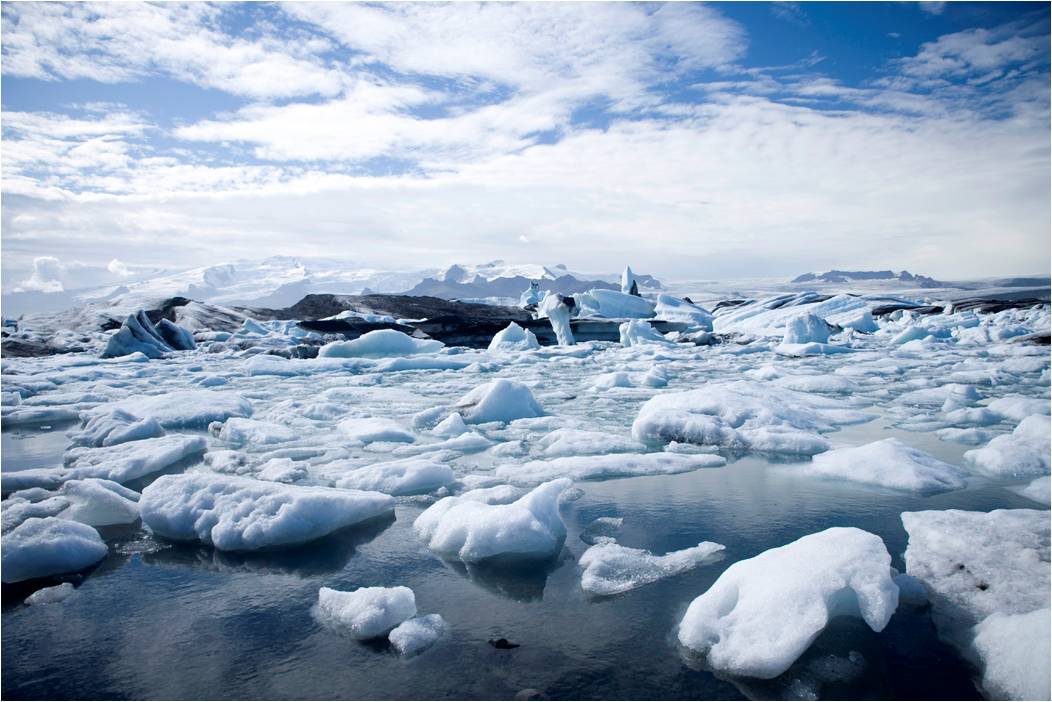
An interesting blog I’ve been following is reporting on the Catlin Arctic Survey 2010. This is a British led expedition to the Artic who are investigating how greenhouse gases could affect the marine life of the Arctic Ocean. The team will be experiencing temperatures down to -30oC (by way of comparison, a domestic freezer is only–18ยบ) and wind speeds of up to 40kph. There is a real risk of condition such as frostbite and hypothermia.

The expedition doctor, Martin Rhodes, or “Doc Martin”, will be posting information on the medical aspects of the trip. A short video interview with him about the hazards to the human body when operating in a polar environment is available on their website here.